

iptv encoder box technology stands at the forefront of digital media distribution, transforming how content is delivered and consumed. In 2026, understanding the nuances of an iptv encoder box is more crucial than ever for broadcasters, content creators, and even advanced home users. This comprehensive guide will delve deep into what an iptv encoder box is, how it functions, and why it’s an indispensable component of modern IPTV ecosystems.
Table of ContentsWhat is an IPTV Encoder Box and Why is it Essential?How an IPTV Encoder Box Works: A Technical Deep DiveKey Features to Look for in an Advanced IPTV Encoder Box in 2026Applications and Use Cases for an IPTV Encoder BoxChoosing the Right IPTV Encoder Box for Your NeedsOptimizing Performance with Your IPTV Encoder BoxFAQ SectionRelated IPTV Services
What is an IPTV Encoder Box and Why is it Essential?
An IPTV encoder box is a dedicated hardware device designed to convert analog or digital video and audio signals into a format suitable for transmission over an Internet Protocol (IP) network. Essentially, it takes raw media input – whether from a camera, a satellite receiver, or a video player – and packages it into IP packets, making it streamable. This conversion process is critical because standard video signals cannot be directly transmitted over IP networks; they need to be encoded and compressed first.
The importance of an IPTV encoder box cannot be overstated in today’s media landscape. With the increasing demand for high-quality, on-demand, and live streaming content, encoders serve as the bridge between traditional media sources and the vast world of IP-based distribution. They enable broadcasters to reach wider audiences, content creators to monetize their work, and businesses to implement effective internal communication systems. The right encoder ensures minimal latency, optimal video quality, and reliable delivery, factors that are paramount for a positive viewing experience.
Furthermore, an IPTV encoder box often supports various encoding standards, such as H.264 (AVC) and H.265 (HEVC), which are crucial for efficient bandwidth utilization. H.265, in particular, offers significant compression improvements over H.264, allowing for higher quality video at lower bitrates, or the same quality at even lower bitrates. This efficiency is vital for delivering 4K and even 8K content without overwhelming network infrastructure, a growing concern as video resolutions continue to climb. For those looking to set up their own IPTV service, understanding these technical specifications is key. You can explore various IPTV pricing plans that often factor in encoding capabilities.
How an IPTV Encoder Box Works: A Technical Deep Dive
The operation of an IPTV encoder box involves several sophisticated steps. First, the device receives an input signal, which can be in various forms such as HDMI, SDI, composite, or even IP streams from other sources. This raw video and audio data is then processed by the encoder’s internal hardware and software.
The core function is compression. Uncompressed video data is extremely large and impractical for network transmission. The encoder uses complex algorithms to remove redundant information from the video frames, significantly reducing the file size while striving to maintain visual quality. This is where standards like H.264 and H.265 come into play. These codecs are highly efficient, intelligently analyzing motion and color changes to achieve remarkable compression ratios.
After compression, the encoded video and audio streams are encapsulated into transport streams (e.g., MPEG-TS) and then further packaged into IP packets. These packets are then sent over the network using various streaming protocols like UDP, RTP, RTMP, HLS, or DASH. The choice of protocol often depends on the specific application – for example, HLS and DASH are popular for adaptive bitrate streaming to various devices, while RTMP is commonly used for live streaming to platforms like YouTube or Twitch. The reliability and speed of this process define the quality of the IPTV service. To see the breadth of channels made possible by such technology, visit our channels page.
Key Features to Look for in an Advanced IPTV Encoder Box in 2026
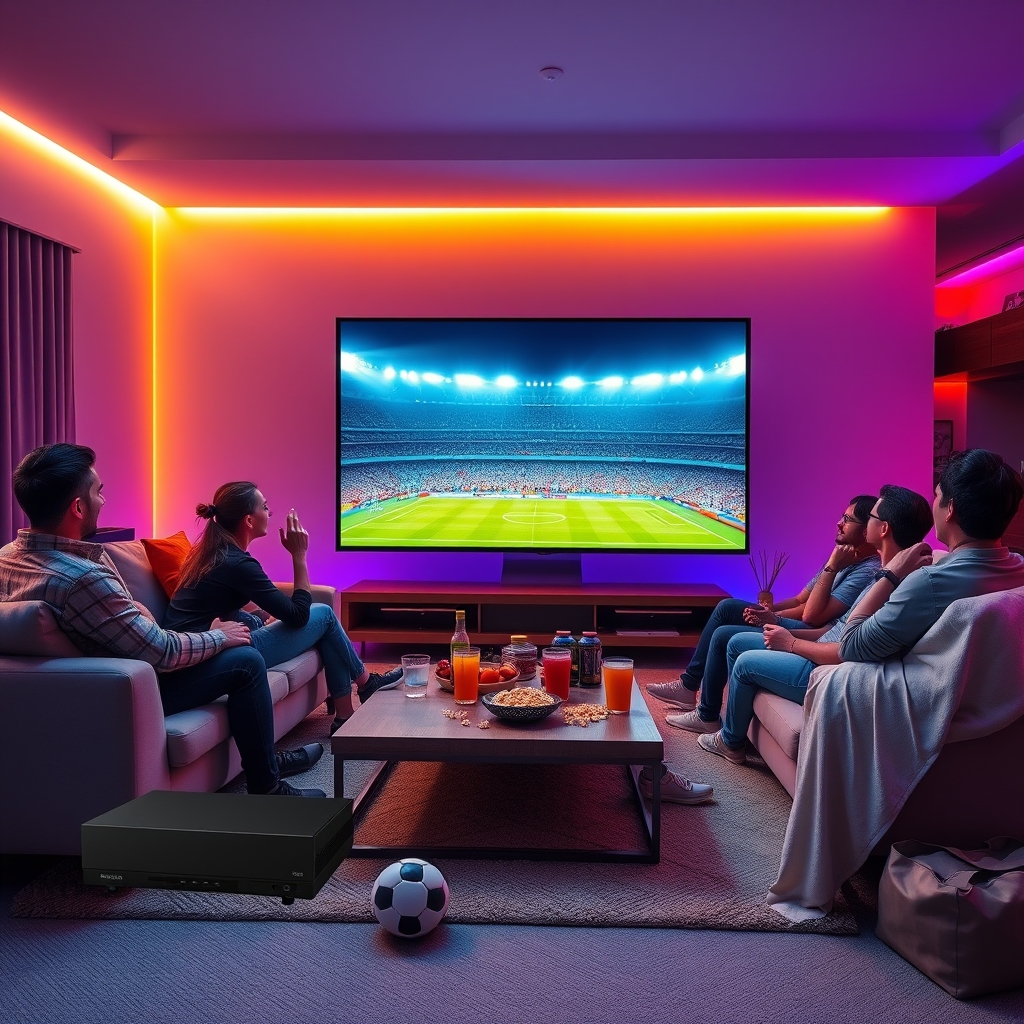
When selecting an IPTV encoder box in 2026, several features differentiate a good encoder from an exceptional one. High on the list is support for multiple input types, ensuring versatility across different source devices. The ability to handle various resolutions, from SD to 4K and beyond, is also paramount, especially as higher definition content becomes standard. Look for encoders that offer flexible output options, including multiple streaming protocols and simultaneous output to different destinations.
Another crucial feature is low latency encoding. For live events, sports, and interactive applications, minimizing the delay between capture and display is critical. Advanced encoders employ sophisticated processing techniques to reduce encoding and transmission latency to mere milliseconds. Furthermore, robust error correction capabilities are vital to ensure a stable stream, even over less-than-perfect network conditions. This often involves forward error correction (FEC) mechanisms that add redundant data to the stream, allowing receiving devices to reconstruct lost packets.
Remote management and monitoring capabilities are also increasingly important. An IPTV encoder box that can be configured, controlled, and monitored from a central location simplifies deployment and maintenance, especially in large-scale operations. Look for intuitive web interfaces, API support for integration with other systems, and comprehensive logging features. Finally, scalability and future-proofing are key. Choose an encoder that can adapt to evolving standards and growing demands, potentially through firmware updates or modular designs. To understand how these features impact service delivery, explore the various supported devices that connect to such encoder systems.
Applications and Use Cases for an IPTV Encoder Box
The versatility of an IPTV encoder box makes it indispensable across a wide range of industries and applications. In broadcasting, encoders are used to transmit live television channels, news feeds, and sports events over IP networks to various distribution platforms. This includes traditional cable and satellite operators transitioning to IP, as well as new OTT (Over-The-Top) services that deliver content directly to internet-connected devices.
Corporate environments leverage IPTV encoders for internal communications, such as company-wide meetings, training sessions, and digital signage. By streaming content over the corporate network, businesses can efficiently disseminate information to employees across multiple locations. Educational institutions also benefit, using encoders to stream lectures, provide remote learning opportunities, and build campus-wide video distribution systems. The flexibility offered by an IPTV encoder box allows for dynamic content delivery, enhancing engagement and accessibility.
Beyond these traditional uses, an IPTV encoder box finds applications in niche markets like hospitality, where hotels use them to deliver custom TV channels and video-on-demand services to guests. Healthcare facilities utilize them for patient entertainment and educational content. Even individual content creators and streamers can use professional-grade encoders to elevate the quality and reliability of their live broadcasts, reaching a global audience with high-definition content. The adaptability of the IPTV encoder box makes it a cornerstone of modern video distribution.
Choosing the Right IPTV Encoder Box for Your Needs
Selecting the ideal IPTV encoder box requires careful consideration of several factors tailored to your specific requirements. First, assess your input sources: Do you primarily use HDMI, SDI, or other video interfaces? Ensure the encoder supports the necessary input types and resolutions. Next, consider your output requirements: What streaming protocols do you need (e.g., HLS, RTMP, UDP), and how many simultaneous streams or destinations are necessary?
Bandwidth availability is another critical factor. If you have limited bandwidth, an encoder supporting highly efficient codecs like H.265 (HEVC) will be paramount to deliver quality content without buffering issues. For live streaming, prioritize encoders with ultra-low latency capabilities. The number of channels or streams you need to encode simultaneously will dictate whether you need a single-channel encoder or a multi-channel solution. Scalability is key; think about your future growth and choose a device that can accommodate increased demands. For enterprise-level solutions, enterprise IPTV pricing often reflects these advanced capabilities.
Finally, consider your budget and the level of technical support offered by the manufacturer. While high-end encoders offer superior performance and features, there are also excellent mid-range options that provide a great balance of cost and functionality. Reading reviews, comparing specifications, and consulting with experts can help you make an informed decision. A well-chosen IPTV encoder box will be a reliable workhorse for your video distribution needs for years to come.
Optimizing Performance with Your IPTV Encoder Box
Once you’ve selected your IPTV encoder box, optimizing its performance is crucial for delivering the best possible viewing experience. This involves a combination of proper configuration, network management, and continuous monitoring. Start by ensuring your input signal is clean and stable. Any noise or degradation in the source signal will be amplified during encoding and transmission.
Configure your encoder settings meticulously. This includes selecting the appropriate video and audio codecs (e.g., H.264, H.265, AAC), setting the correct bitrate for your target audience’s bandwidth, and adjusting parameters like frame rate and keyframe interval. For adaptive bitrate (ABR) streaming, configure multiple output profiles at different resolutions and bitrates to cater to various network conditions and devices. This allows viewers to automatically receive the most suitable stream for their connection, minimizing buffering and maximizing quality.
Network infrastructure plays a vital role. Ensure your network has sufficient bandwidth and low latency to handle the encoded streams. Quality of Service (QoS) settings on your network can prioritize video traffic, preventing other network activities from impacting stream stability. Regularly monitor your encoder’s performance and network health using built-in diagnostics or external tools. This proactive approach helps identify and resolve potential issues before they affect your viewers. Partnering with a reliable IPTV provider, such as those found on iptvbaba.com, can also offer valuable insights and support in optimizing your setup.
FAQ Section
Q1: What is the primary function of an IPTV encoder box?
A1: The primary function of an IPTV encoder box is to convert video and audio signals into an IP-compatible format, allowing them to be streamed over an internet protocol network for various applications like live broadcasting, on-demand content, and corporate communications.
Q2: What is the difference between H.264 and H.265 codecs in an IPTV encoder box?
A2: H.265 (HEVC) is a more advanced video codec than H.264 (AVC). It offers significantly better compression efficiency, meaning it can deliver the same video quality at roughly half the bitrate of H.264, or much higher quality at the same bitrate. This makes H.265 ideal for 4K/8K content and situations with limited bandwidth.
Q3: Can an IPTV encoder box be used for live streaming to platforms like YouTube or Twitch?
A3: Yes, many professional IPTV encoder boxes support streaming protocols like RTMP (Real-Time Messaging Protocol), which is commonly used by platforms like YouTube, Twitch, and Facebook Live for live broadcasts. They can encode your video and send it directly to these services.
Q4: What kind of input sources can an IPTV encoder box accept?
A4: An IPTV encoder box can typically accept a variety of input sources, including HDMI, SDI (Serial Digital Interface), composite video, component video, and even IP streams from other sources. The specific inputs supported depend on the model and manufacturer.
Q5: How does an IPTV encoder box handle multiple channels or streams?
A5: Some IPTV encoder boxes are designed as multi-channel encoders, meaning they have multiple input ports and internal processing units to encode several video streams simultaneously. This is particularly useful for broadcasters or organizations that need to distribute multiple channels of content concurrently.
Related IPTV Services
You may also visit the following websites for similar services: